

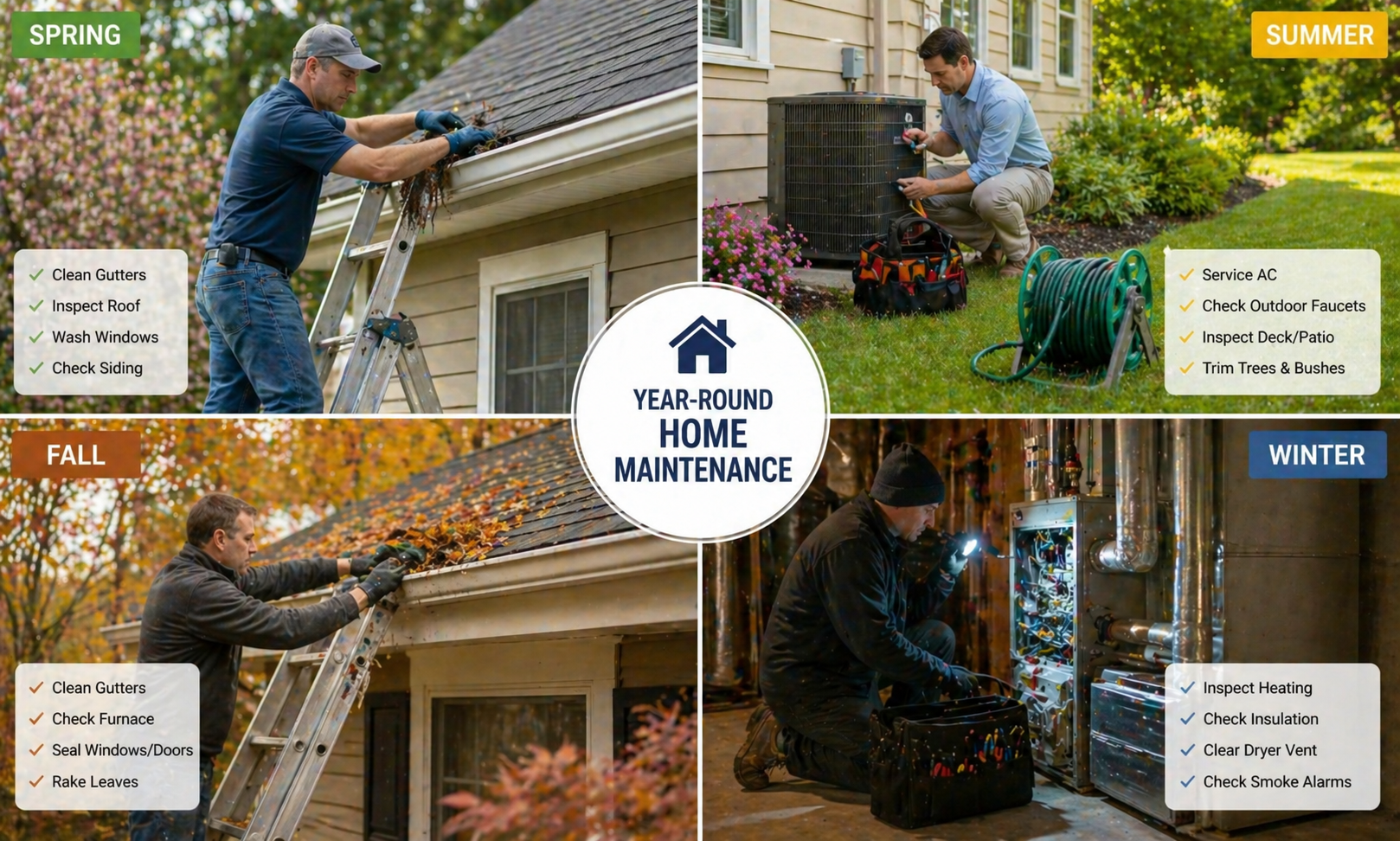
Owning a home brings tremendous satisfaction alongside serious responsibilities. Regular maintenance protects your investment, prevents costly emergency repairs, and keeps your family safe and comfortable throughout the year. A comprehensive home maintenance checklist for every season ensures nothing gets overlooked as weather patterns change across the USA, UK, and Canada. Each season presents unique challenges and opportunities for property care, from freezing winters that threaten pipes to scorching summers that stress cooling systems. By following a structured seasonal approach, you address problems before they escalate while spreading the workload across twelve months instead of facing overwhelming tasks all at once. This guide walks you through essential maintenance activities tailored to spring, summer, autumn, and winter conditions. Whether you live in a detached house in Texas, a semi-detached property in Manchester, or a townhouse in Vancouver, these seasonal routines apply universally with minor adjustments for local climate extremes.
Spring Home Maintenance Checklist Essentials
Spring awakens your property from winter dormancy and reveals damage that cold weather inflicted over previous months. This season offers ideal conditions for exterior work before summer heat arrives, making it the perfect time to tackle outdoor projects. Start your spring home maintenance checklist for every season by inspecting your roof for missing or damaged shingles that winter storms may have loosened. Look for cracked caulking around chimneys and vent pipes where water could penetrate. If you notice significant damage or feel uncomfortable working at heights, professional roofers should handle repairs to ensure safety and proper weatherproofing.
Clean gutters and downspouts thoroughly after trees drop their spring debris. Clogged gutters cause water to overflow and damage fascia boards, soffit, and foundation walls. Flush downspouts with garden hoses to confirm water flows freely away from your foundation. Extend downspout outlets at least six feet from the house to prevent basement flooding and foundation settling. In regions with heavy spring rainfall like the Pacific Northwest or the UK, this task becomes absolutely critical for preventing water damage that costs thousands to repair later.
Inspect exterior walls for cracks in masonry, peeling paint, or damaged siding that developed during freeze-thaw cycles. Small cracks in concrete foundations should be sealed with appropriate fillers before they expand. Repaint exterior wood trim where paint has deteriorated to protect underlying materials from moisture and insects. Check window and door frames for gaps or deteriorated caulking that allows drafts and water infiltration. Fresh caulk and weatherstripping improve energy efficiency while preventing expensive water damage to interior walls.
Test your air conditioning system before hot weather arrives and demand for HVAC technicians peaks. Replace filters, clean condenser coils of accumulated debris, and ensure the unit cycles on properly. Schedule professional service if you notice unusual noises, weak airflow, or inadequate cooling. Spring maintenance prevents system failures during summer heatwaves when replacement parts and technician availability become scarce. Service outdoor faucets by checking for leaks and ensuring hose connections seal properly without dripping.
Summer Tasks in Your Home Maintenance Checklist for Every Season
Summer provides the longest daylight hours and most stable weather for tackling major exterior projects. Your summer home maintenance checklist for every season should prioritize tasks requiring dry conditions and comfortable working temperatures. Inspect and clean your deck or patio thoroughly, looking for loose boards, protruding nails, or unstable railings that create safety hazards. Power wash wooden decks to remove accumulated dirt, mildew, and algae, then apply fresh stain or sealant to protect wood from moisture damage and UV degradation.
Examine your driveway and walkways for cracks or settling that occurred during winter freeze-thaw cycles. Seal asphalt driveways with appropriate products to extend their lifespan and prevent water from penetrating the base layer. Fill cracks in concrete paths before they widen and create tripping hazards. In the UK and Canada where frost heaving commonly damages paved surfaces, addressing these issues during summer prevents them from worsening next winter.
Inspect and maintain your lawn irrigation system if you have one. Check sprinkler heads for proper coverage and adjust them to avoid wasting water on driveways or sidewalks. Look for leaks in underground lines that create soggy spots or unusually high water bills. Clean window screens and check for tears that let insects inside. Repair or replace damaged screens before peak bug season arrives. Wash exterior windows to maximize natural light entering your home and improve curb appeal.
Test all ground fault circuit interrupter outlets in bathrooms, kitchens, and outdoor locations monthly during summer when electrical use increases. These safety devices prevent dangerous shocks in wet areas but only work if functioning properly. Press the test button to trip the outlet, then reset it to confirm proper operation. Service your lawn mower and other power equipment with oil changes, blade sharpening, and filter replacements according to manufacturer schedules. Well-maintained equipment lasts longer and operates more safely than neglected tools.
Check your home’s exterior drainage during summer rainstorms. Watch where water flows during heavy rain to identify low spots where it pools near the foundation. Regrade soil as needed to slope away from the house, preventing water from seeping into basements or crawl spaces. Trim trees and shrubs away from your house to improve air circulation, reduce pest access, and prevent branches from damaging siding or windows during summer storms. Maintain at least two feet of clearance between vegetation and exterior walls.
Autumn Preparation Through Your Home Maintenance Checklist for Every Season
Autumn represents your last opportunity to prepare for harsh winter conditions before freezing temperatures arrive. This critical season in your home maintenance checklist for every season focuses heavily on winterization tasks that prevent expensive cold-weather damage. Clean gutters again after deciduous trees drop their leaves. This final autumn cleaning proves absolutely essential because winter snow and ice cannot drain properly through clogged gutters, leading to ice dams that damage roofs and cause interior leaks.
Inspect your heating system before cold weather forces it into continuous operation. Replace furnace filters and schedule professional service to ensure safe, efficient operation throughout winter. Technicians check for carbon monoxide leaks, verify proper burner operation, and identify worn components before they fail during the coldest nights. In the UK and Canada where heating systems run six months annually, this maintenance prevents mid-winter breakdowns when replacement parts and emergency service cost premium prices.
Drain and store garden hoses before freezing temperatures arrive. Disconnect hoses from outdoor faucets and drain them completely before coiling for storage. Shut off interior valves supplying outdoor faucets, then open the exterior valves to drain remaining water. Any water left in outdoor plumbing lines will freeze and burst pipes, causing flooding and expensive repairs. Install insulated faucet covers in regions experiencing hard freezes for additional protection against pipe damage.
Inspect weatherstripping around doors and windows, replacing any that has deteriorated. Quality weatherstripping prevents heated air from escaping during winter while blocking cold drafts that make heating systems work harder. Check window glazing putty and replace sections that have dried, cracked, or fallen out. Inspect chimney mortar and flashing if you burn wood or have a gas fireplace. Schedule professional chimney cleaning and inspection to remove creosote buildup that causes chimney fires.
Test smoke detectors and carbon monoxide alarms throughout your home, replacing batteries even if they still function. These life-saving devices deserve fresh batteries annually, and autumn timing ensures they protect your family when homes seal tight against winter cold and heating systems operate continuously. Reverse ceiling fan directions to push warm air downward, improving heating efficiency throughout winter months. Most fans have a small switch on the motor housing that changes blade rotation direction.
Winter Vigilance in Your Home Maintenance Checklist for Every Season
Winter maintenance focuses primarily on monitoring systems under stress and preventing weather-related damage. Your winter home maintenance checklist for every season emphasizes vigilance rather than major projects since harsh weather limits outdoor work. Inspect your roof after heavy snowfalls in regions like Canada, the northern USA, and Scotland where snow accumulation threatens structural integrity. Remove excessive snow buildup using roof rakes specifically designed for this purpose, working from the ground rather than climbing onto icy roofs.
Watch for ice dams forming along roof edges where heat escaping through your attic melts snow that refreezes at colder eaves. Ice dams prevent proper drainage and force water under shingles, causing interior ceiling and wall damage. Improve attic insulation and ventilation to prevent heat loss that creates ice dams. In emergency situations, calcium chloride ice melt in mesh bags placed on ice dams can create drainage channels, though proper insulation provides the only permanent solution.
Monitor your heating system’s performance throughout winter. Strange noises, uneven heating, or frequent cycling indicate problems requiring professional attention. Keep vents and radiators clear of furniture and drapes that block heat circulation. Replace furnace filters monthly during peak heating season to maintain efficiency and indoor air quality. Check your home’s humidity levels, as excessively dry winter air damages wood floors and furniture while causing respiratory discomfort. Whole-house humidifiers or portable units maintain comfortable humidity between thirty and fifty percent.
Inspect your foundation and basement regularly for signs of water infiltration. Melting snow often causes seasonal flooding in basements lacking proper drainage. Ensure sump pumps operate correctly by pouring water into the pit and confirming the pump activates. Test battery backup systems if equipped, as power outages during winter storms frequently coincide with flooding events. Keep basement floor drains clear and ensure they contain enough water to maintain trap seals that prevent sewer gas from entering your home.
Check pipes in unheated areas like basements, crawl spaces, and exterior walls during extreme cold snaps. Let faucets drip slightly when temperatures drop below freezing to keep water moving through pipes, preventing ice formation. Open cabinet doors under sinks along exterior walls so warm air can circulate around plumbing. If pipes do freeze, never use open flames to thaw them. Apply gentle heat with hair dryers or heating pads, working from the faucet back toward the frozen section to allow melting ice to escape.
Monthly Tasks Spanning Your Home Maintenance Checklist for Every Season
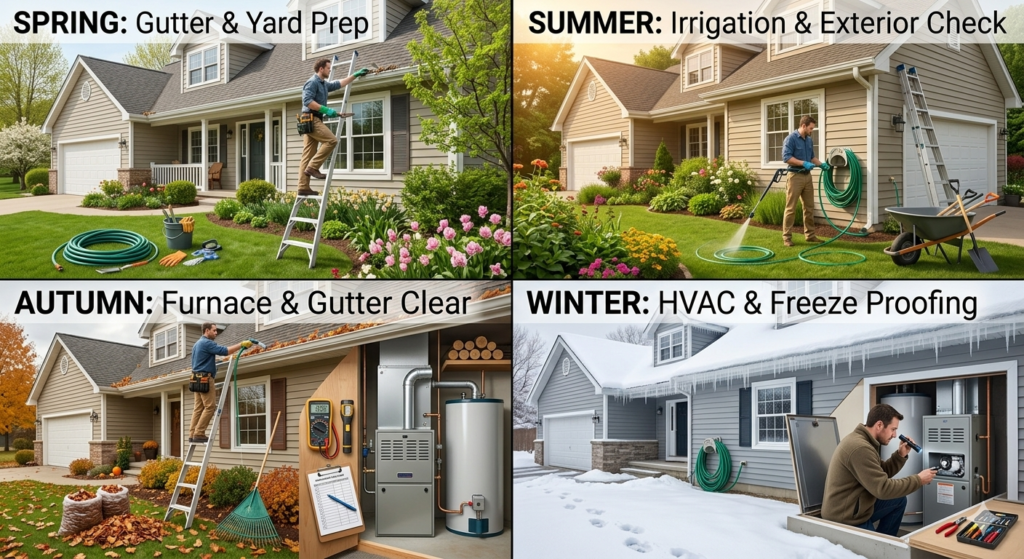
Certain maintenance activities deserve monthly attention regardless of season. These recurring tasks in your home maintenance checklist for every season prevent problems before they develop into emergencies. Test all ground fault circuit interrupter outlets throughout your home by pressing test buttons and confirming they trip properly. These safety devices protect against electrical shocks in bathrooms, kitchens, garages, and outdoor locations but only when functioning correctly.
Inspect fire extinguishers to ensure pressure gauges show adequate charge and units remain accessible. Most residential extinguishers last five to fifteen years depending on type, but annual professional inspection ensures reliability when emergencies strike. Clean range hood filters monthly to prevent grease buildup that reduces effectiveness and creates fire hazards. Most filters wash easily in dishwashers or sinks with hot soapy water.
Run water and flush toilets in rarely used bathrooms to prevent trap seals from drying out and allowing sewer gases inside. This proves especially important in guest bathrooms, basement facilities, and vacation properties. Check water softener salt levels if you have these systems, refilling when salt drops to one-quarter tank capacity. Test garage door auto-reverse safety features by placing objects in the door’s path and confirming it reverses upon contact.
Inspect visible plumbing under sinks and around water heaters for signs of leaks, corrosion, or moisture. Small drips waste water and cause damage over time when ignored. Check water heater temperature settings, maintaining them around 120 degrees Fahrenheit for safety and efficiency. Higher temperatures waste energy and create scalding risks, while lower settings may not provide adequate hot water or control bacteria growth.
Clean bathroom exhaust fans by removing covers and vacuuming accumulated dust from blades and motors. Efficient ventilation prevents moisture damage and mold growth in bathrooms. Replace HVAC filters according to manufacturer recommendations, typically monthly for inexpensive fiberglass filters or every three months for higher-quality pleated versions. Clean filters improve air quality and system efficiency while preventing expensive blower motor failures.
Annual Deep Maintenance Tasks Worth Scheduling
Some maintenance activities only need annual attention but prove critical for long-term property protection. Schedule these tasks in your home maintenance checklist for every season during months when the weather cooperates and you have adequate time. Professional chimney inspection and cleaning should occur annually before the heating season if you burn wood regularly. Creosote accumulation inside chimneys causes dangerous fires that spread rapidly through homes.
Flush water heaters annually to remove sediment that accumulates at tank bottoms, reducing heating efficiency and capacity. Attach a garden hose to the drain valve and empty several gallons until water runs clear. This simple task extends the water heater lifespan significantly. Inspect attic spaces for adequate insulation, proper ventilation, signs of roof leaks, and pest activity. Attics reveal problems early before they cause visible interior damage.
Test sump pumps annually even if your area hasn’t experienced flooding recently. Pour water into the pit until the float activates and confirms the pump discharges properly. Battery backup systems need testing to ensure they engage during power failures. Service septic systems according to usage and local regulations, typically every three to five years. Professional pumping prevents backups and system failures that cost thousands to repair.
Inspect foundation walls and basement floors for cracks, moisture intrusion, or settling issues. Small foundation problems grow into major structural concerns when ignored. Professional foundation specialists should evaluate significant cracks or movement. Clean dryer vents thoroughly at least annually to prevent lint accumulation that causes fires and reduces efficiency. This often-overlooked task prevents hundreds of house fires annually across North America and the UK.
Record Keeping for Your Home Maintenance Checklist for Every Season
Maintaining detailed records transforms your home maintenance checklist for every season from a task list into a valuable property management tool. Create a dedicated home maintenance binder or digital file containing equipment manuals, warranty information, service records, and maintenance schedules. Document when you complete tasks, noting any issues discovered and how you addressed them. This history helps identify patterns, plan future maintenance, and provides valuable information for insurance claims or property sales.
Photograph your home’s systems and components before problems develop. These images help contractors diagnose issues remotely and provide proof of proper maintenance for warranty claims. Keep receipts for all maintenance supplies and professional services, organizing them by system and date. These records prove invaluable for tax deductions if you operate a home business or maintain rental properties.
Track utility bills monthly to identify unusual consumption patterns that indicate problems. Sudden increases in water usage often signal leaks, while spiking electrical bills suggest failing appliances or HVAC issues. Seasonal comparisons reveal whether efficiency improvements like new windows or insulation deliver expected savings. Create a digital calendar with recurring reminders for monthly, seasonal, and annual tasks so nothing gets forgotten during busy periods.
Hiring Professionals for Complex Maintenance Tasks
Understanding your limits prevents dangerous situations and costly mistakes. While homeowners can handle many items on a home maintenance checklist for every season, certain tasks require professional expertise and specialized equipment. Electrical work beyond changing fixtures, structural repairs, major plumbing projects, roof work above single-story heights, and HVAC system repairs should involve licensed professionals who carry proper insurance and understand building codes.
Research contractors carefully before hiring them for significant projects. Verify licenses and insurance coverage, check references from recent customers, and obtain multiple written estimates for comparison. Beware of unusually low bids that often indicate unlicensed workers or substandard materials. Establish clear written contracts specifying work scope, materials, timelines, and payment schedules before projects begin.
Develop relationships with reliable contractors before emergencies strike. Having trusted electricians, plumbers, and HVAC technicians available when problems occur prevents desperate decisions during crises. Many contractors offer maintenance agreements providing priority service and discounted rates to regular customers. These relationships prove invaluable during peak demand periods when finding available professionals becomes challenging.
FAQs
How often should I follow my home maintenance checklist for every season?
Complete season-specific tasks as weather transitions occur, typically four times yearly. Monthly tasks happen twelve times annually, while certain items need attention only once per year. This schedule spreads workload evenly while addressing issues when conditions allow proper completion.
What happens if I skip seasonal home maintenance tasks?
Skipped maintenance leads to accelerated deterioration, higher repair costs, and potential safety hazards. Small problems caught early cost far less than major failures. Regular maintenance preserves property value and prevents insurance claims that raise premiums.
Can renters benefit from a home maintenance checklist for every season?
Renters should handle tasks like changing HVAC filters, testing safety devices, and reporting problems to landlords promptly. This protects health and safety while maintaining good tenant relationships. Landlords remain responsible for major systems and structural maintenance.
Should I hire professionals or complete maintenance tasks myself?
Handle tasks matching your skill level and available time safely. Professional help becomes essential for electrical work, gas appliances, structural issues, and projects requiring specialized tools or safety equipment. Improper DIY work often costs more to fix than hiring professionals initially.
How much should I budget for home maintenance annually?
Financial experts recommend saving one to four percent of your home’s value annually for maintenance and repairs. Older homes or those in harsh climates need larger reserves. This fund prevents financial stress when major systems fail unexpectedly.
Conclusion
A comprehensive home maintenance checklist for every season protects your property investment while ensuring family safety and comfort throughout the year. By addressing seasonal tasks systematically rather than reactively, you prevent small issues from escalating into expensive emergencies. Whether you live in Florida, Manchester, or Alberta, adapting these guidelines to your specific climate and property type creates a personalized maintenance program that preserves home value and functionality. Start implementing this seasonal approach today and experience the peace of mind that comes from knowing your home receives the care it deserves year-round.